Sep 18, 2026Vision inspection-cusomized
How to Choose a Vision Inspection System for Plastic Parts
Learn how to choose a vision inspection system for plastic parts, including defect types, camera setup, inspection speed, handling and automation requirements.
Introduction
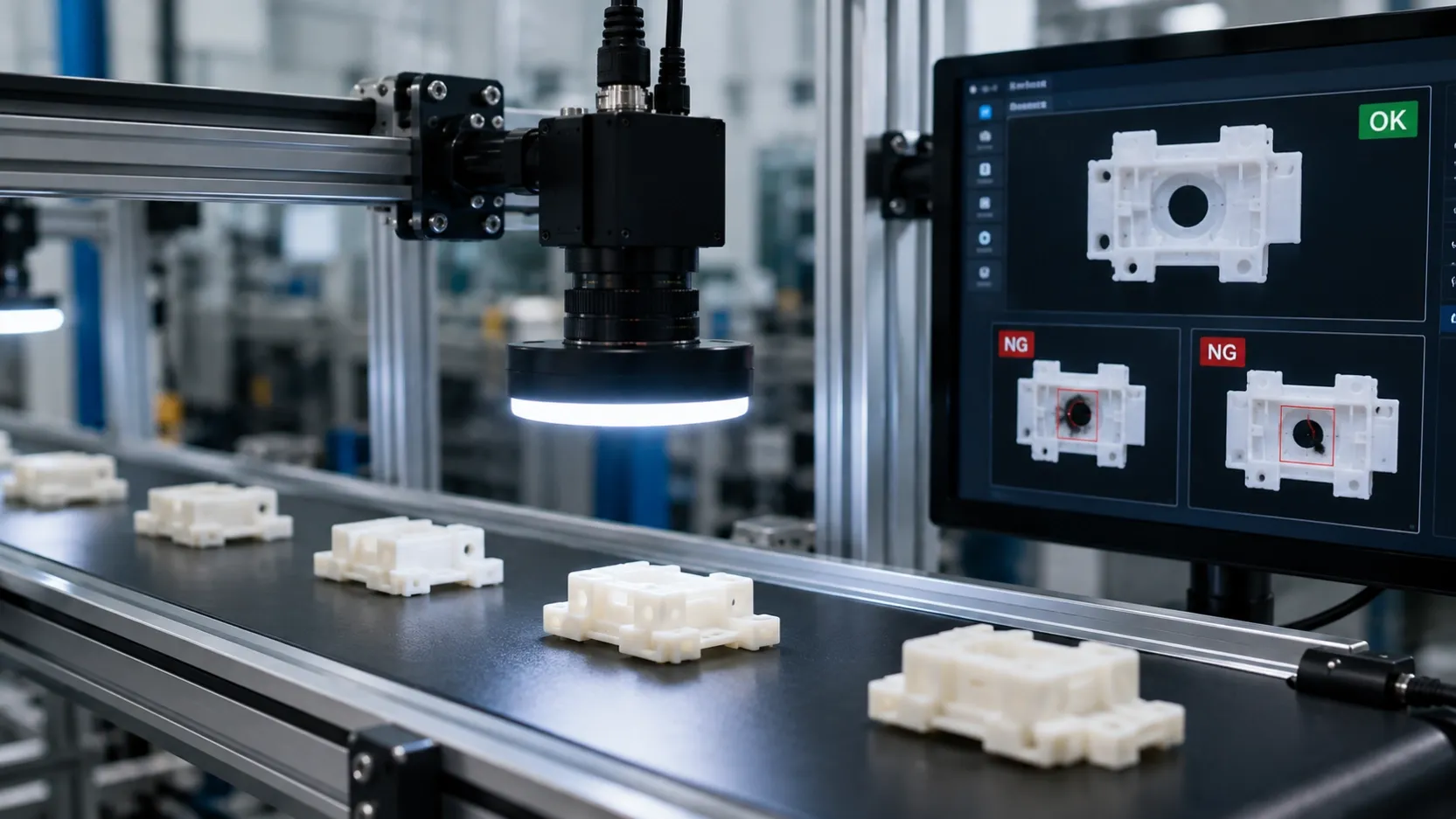
Automated vision inspection is widely used to improve quality control for injection molded plastic parts and other manufactured components. However, selecting the right system involves more than simply choosing a camera.
Product geometry, defect size, inspection speed, part handling, lighting conditions and reject requirements can all affect the final system design.
Before selecting a vision inspection system, manufacturers should first define what needs to be inspected and how the inspection will fit into the production process.
1. Define the Defects You Need to Detect
The first step is to clearly identify the defects and quality conditions that need to be inspected.
Typical inspection requirements for plastic parts may include:
- Short shots or incomplete molding
- Flash or excess material
- Missing features
- Black spots, contamination or foreign material
- Scratches and surface defects
- Deformation
- Incorrect assembly
- Presence or absence of components
- Position or orientation errors
- Color differences
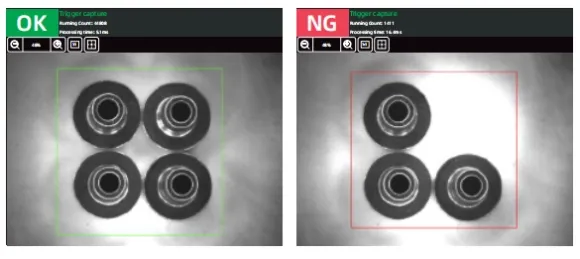
Different defects may require different camera angles, lighting methods and inspection algorithms.
For example, a missing feature may be easy to detect using a simple top view, while small surface defects may require carefully controlled lighting to create sufficient contrast.
The inspection requirement should therefore be defined before the camera configuration is selected.
2. Determine How Many Sides Need Inspection
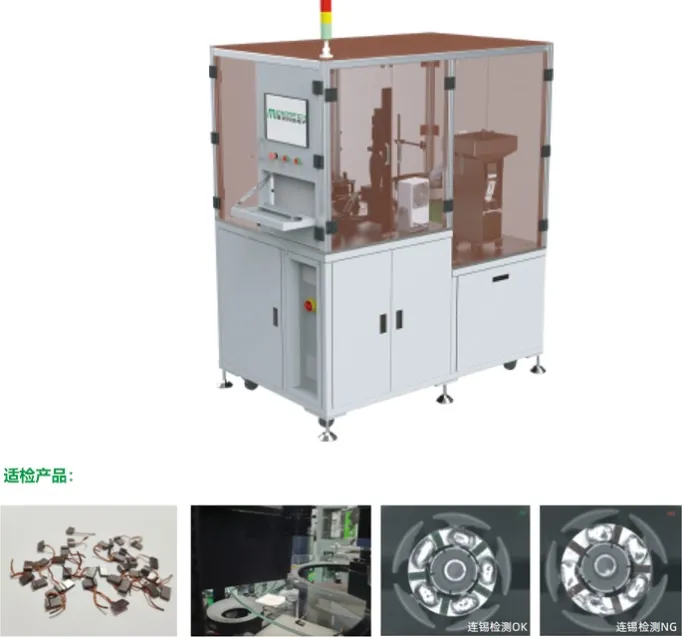
Some products only require inspection from one direction, while others need top, bottom and multiple side views.
The number of surfaces to be inspected directly affects the number and position of cameras.
A simple part with critical features on one surface may only require a single camera. Products with more complex geometry may require multiple cameras or a dedicated inspection machine to achieve sufficient coverage.
Before designing the system, determine:
- Which surfaces contain critical features?
- Can all required features be seen from a fixed position?
- Does the product need to be rotated or repositioned?
- Is bottom inspection required?
- Is the product orientation consistent?
This helps determine whether a simple camera station or a multi-camera automated inspection system is more appropriate.
3. Consider Part Handling and Feeding
A vision system can only inspect features that are presented clearly and consistently to the cameras.
Depending on the production process, plastic parts may be:
- Inspected directly on a conveyor
- Positioned in a fixture
- Transferred by a robot
- Automatically fed and oriented
- Inspected using a rotary or multi-station inspection machine
Stable positioning helps improve inspection consistency and can simplify the vision setup.
For applications involving large quantities of small parts, the feeding and handling method can be just as important as the vision system itself.
4. Define the Required Inspection Speed
Inspection speed should be evaluated according to the actual production process rather than camera specifications alone.
The complete inspection cycle may include:
Part positioning → Image acquisition → Image processing → OK/NG decision → PLC communication → Reject or sorting action
For high-speed applications, all of these steps need to work together.
A camera may process an image quickly, but unstable feeding, product movement or an unsuitable reject mechanism can still limit the overall production speed.
For this reason, the required production rate should be defined early in the project.
5. Choose the Right Camera, Lens and Lighting
Camera resolution is important, but it is only one part of a reliable machine vision system.
Other important factors include:
- Field of view
- Working distance
- Lens selection
- Required defect size
- Camera angle
- Lighting direction
- Surface reflectivity
- Image contrast
Lighting is particularly important.
A configuration suitable for detecting the presence of a component may not be suitable for inspecting scratches, flash or dimensional features.
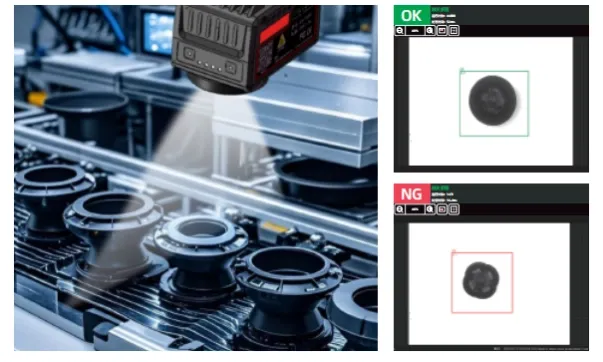
Real product samples should therefore be evaluated before the camera, lens and lighting configuration is finalized.
6. Decide Between Rule-Based Vision and AI Inspection
Not every inspection application requires AI.
Traditional rule-based machine vision can be effective when the inspection criteria are clearly defined. Common examples include dimensional measurement, positioning, presence detection and other applications with predictable features.
AI-based vision can be useful when products have natural variations or when defects are difficult to describe using fixed rules.
For example, AI inspection may be considered when acceptable parts have appearance variations but still need to be distinguished from abnormal surface conditions.
In some applications, conventional vision tools and AI inspection can also be used together.
The appropriate method depends on the product and inspection requirement rather than simply choosing the most advanced algorithm.
7. Plan PLC, Reject and Production Integration
A complete vision inspection system does more than identify defects.
The inspection result usually needs to interact with other production equipment.
Depending on the application, the system may need to:
- Send OK/NG signals
- Communicate with a PLC
- Trigger a reject mechanism
- Stop or control production equipment
- Coordinate with robots or automation systems
- Record inspection results
These requirements should be considered during application evaluation rather than after the vision system has already been selected.
This is especially important when the inspection station is integrated into an existing automated production line.
8. Test Real Samples Before Finalizing the System
Sample testing is one of the most important steps when evaluating a vision inspection application.
Whenever possible, provide representative OK samples and actual NG samples.
NG samples should cover the main defect types that the system is expected to identify, while OK samples should represent normal acceptable product variation.
Testing real samples helps evaluate:
- Camera position
- Lighting
- Image contrast
- Defect visibility
- Inspection method
- Product positioning
- Detection stability
A successful sample test can also identify potential challenges before the final equipment configuration is determined.
Choosing the Right Vision Inspection Solution
There is no single vision inspection configuration that is suitable for every plastic part.
A reliable solution should be designed around the product, defect criteria, inspection surfaces, production speed and automation process.
For relatively simple applications, a smart camera or compact vision station may be sufficient. More complex products requiring multi-side inspection, automatic feeding, sorting or higher production throughput may require a dedicated automated vision inspection machine.
Defining the inspection requirements clearly at the beginning makes it easier to select the appropriate cameras, lighting, inspection method and automation configuration.