Sep 18, 2026Vision inspection-cusomized
Automated Appearance Inspection for Medical Tube Luer Connectors
See how an automated machine vision system feeds, positions, inspects, and evaluates medical tube Luer connectors for consistent appearance and assembly quality.
Automated Appearance Inspection for Medical Tube Luer Connectors
Small medical tube connectors have compact geometries and multiple visible surfaces that must be evaluated consistently. When large quantities of similar white plastic components are handled at production speed, manual inspection can be difficult to standardize and may not provide the repeatability required for stable downstream assembly.
The Inspection Challenge
The application shown in the video handles medical tube Luer connectors. The parts must first be separated from bulk material, oriented correctly, and delivered to the inspection stations in a repeatable position. Their light-colored plastic surfaces and small structural features also require controlled illumination and stable image capture.
Key inspection goals include:
- Confirming the presence and overall shape of the connector
- Checking visible surfaces and molded features
- Identifying obvious deformation, damage, contamination, or incomplete molding
- Verifying orientation before the part moves to the next process
- Keeping inspection results visible to production personnel
The exact defect criteria and dimensional tolerances should be configured according to the approved product standard.
The Automated Vision Solution
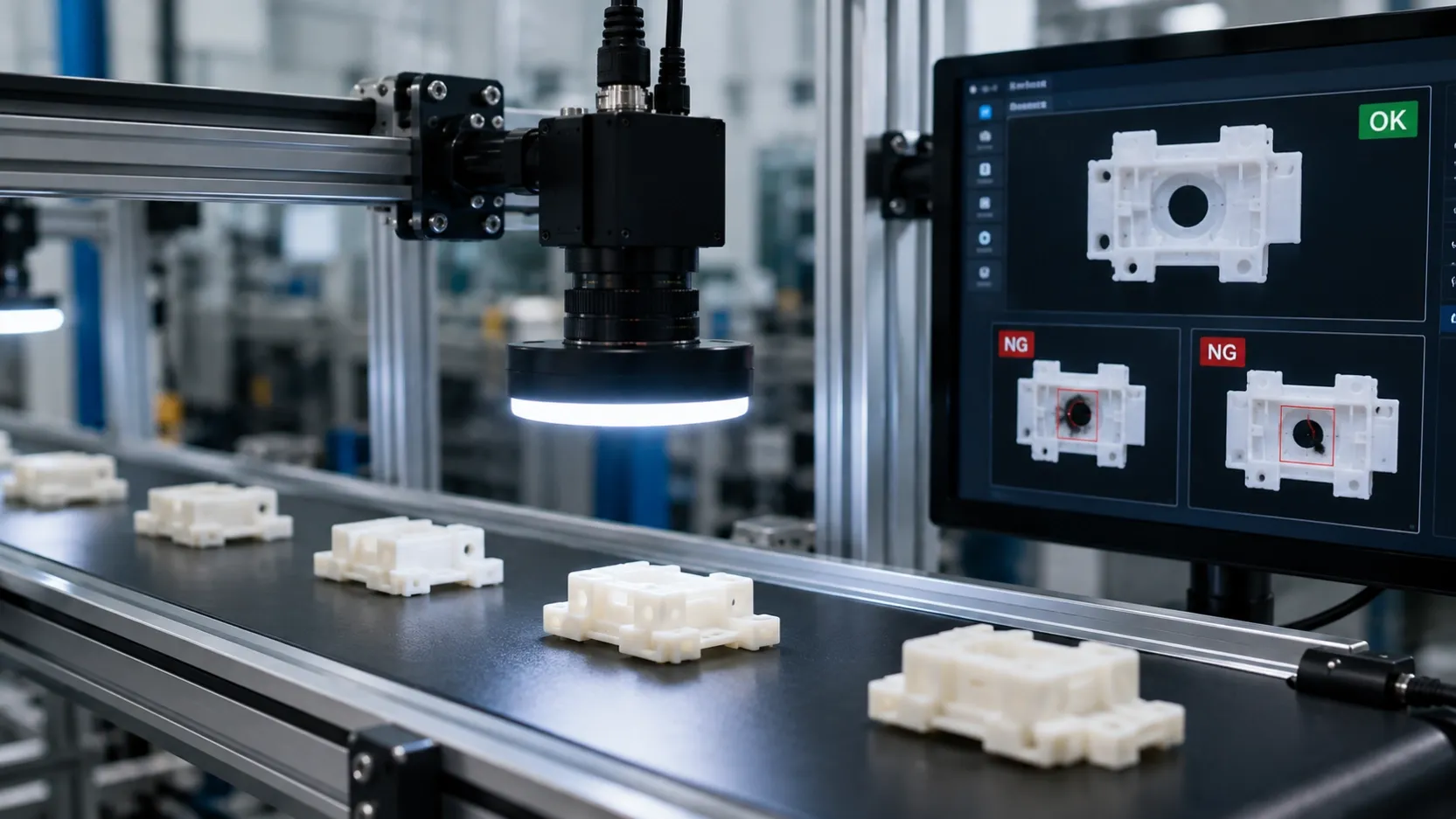
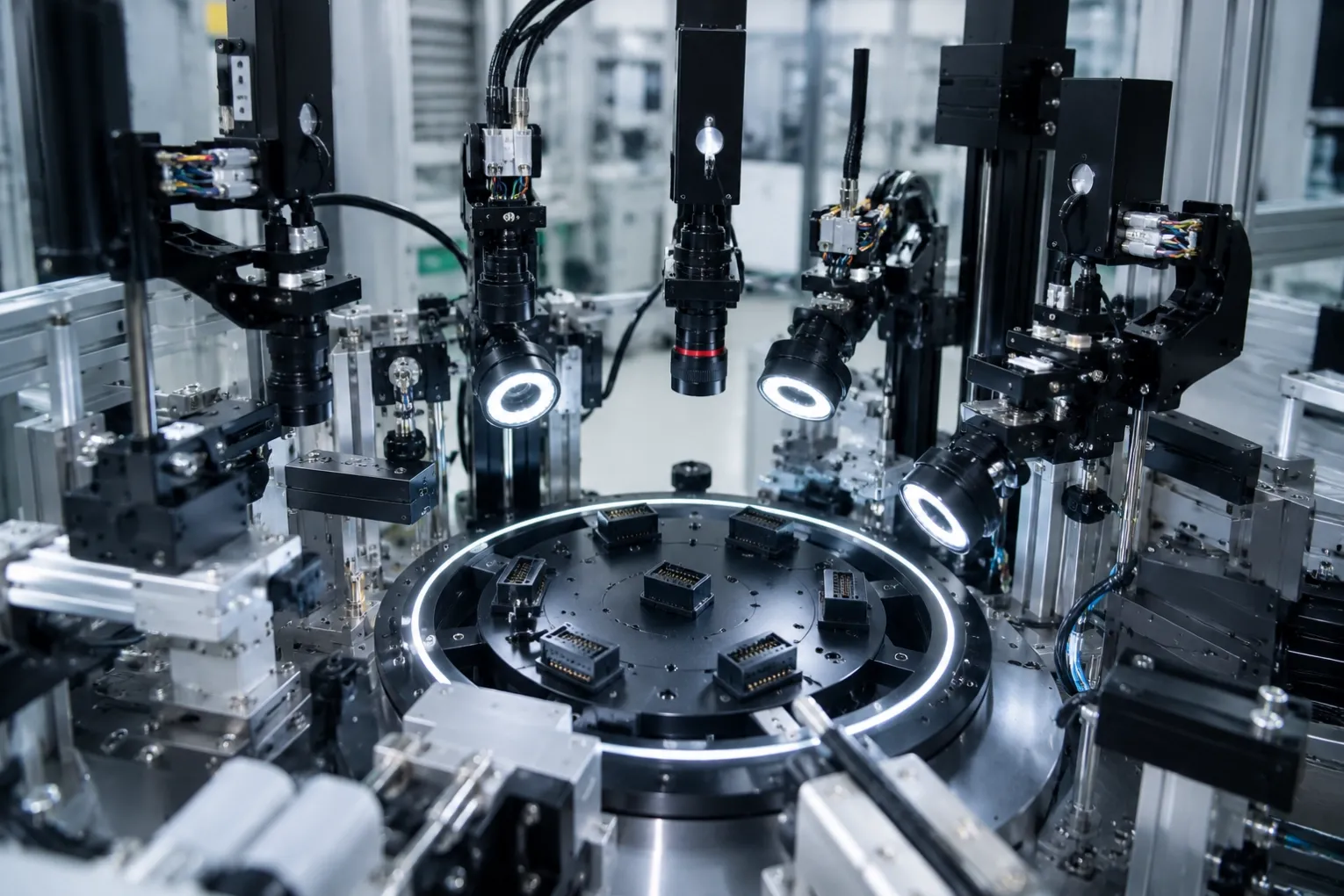
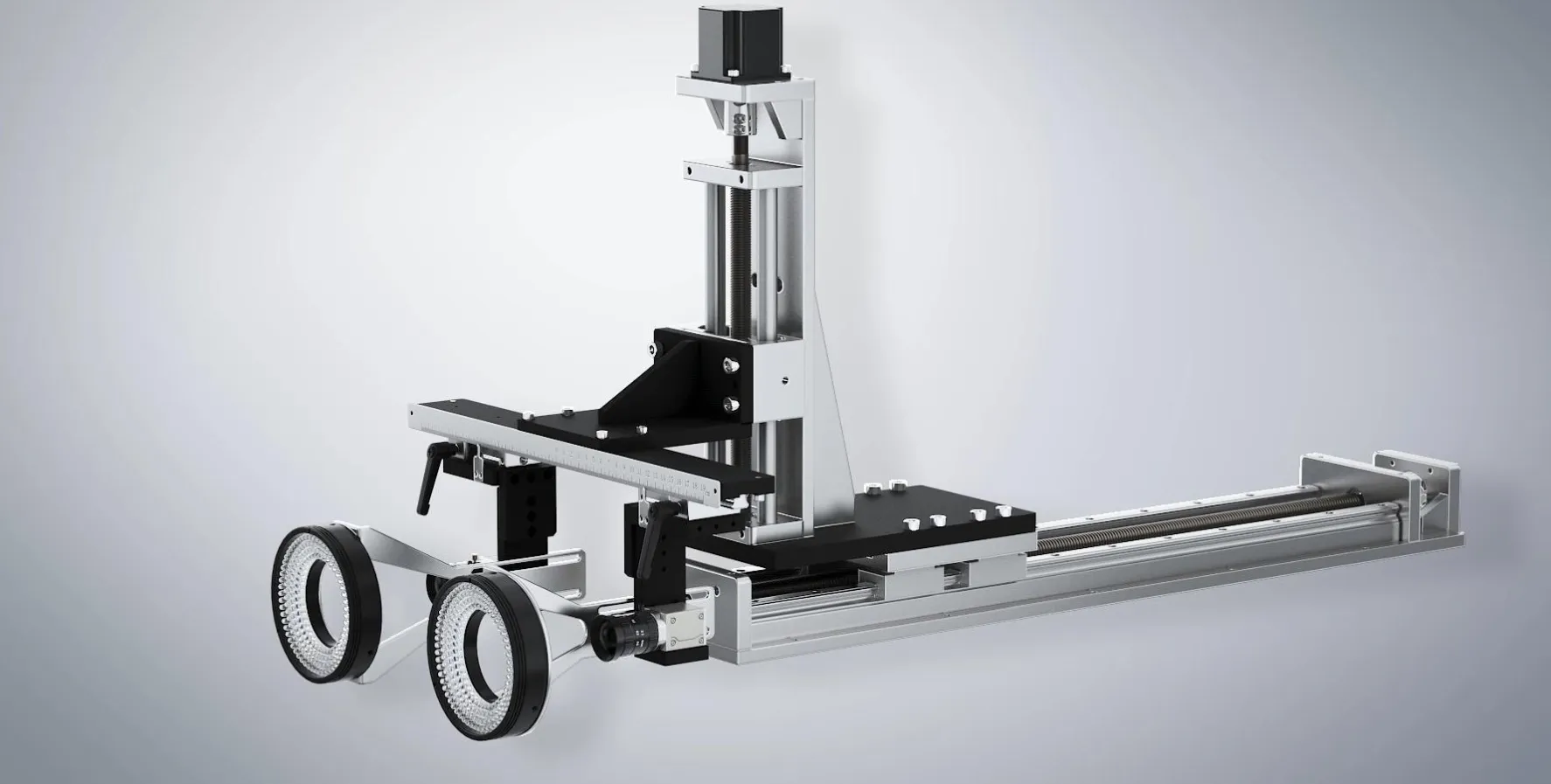
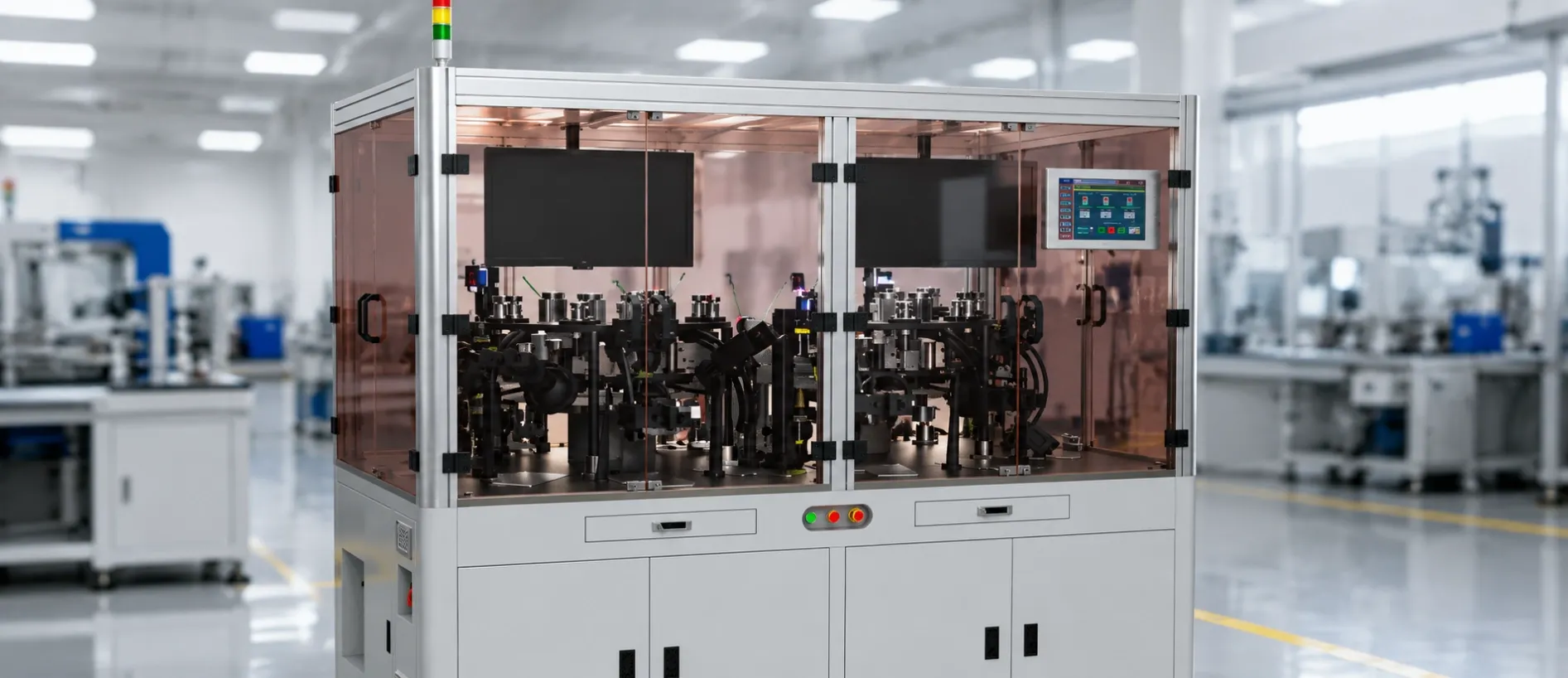
The system combines a vibratory bowl feeder, guided part transport, mechanical positioning, controlled lighting, industrial cameras, and inspection software. Bulk connectors are automatically separated and aligned before entering the inspection area. The machine then captures images from the required viewing positions and evaluates each part against the configured acceptance criteria.
The video also shows the inspection interface displaying multiple images and individual OK results. This gives operators a clear view of the inspected features while the equipment continues running automatically.
Inspection Workflow
- Bulk Luer connectors enter the vibratory bowl feeder.
- Parts are separated and oriented along the feeding track.
- Each connector is transferred into a stable inspection position.
- Controlled illumination highlights the required surfaces and features.
- Industrial cameras capture the inspection images.
- Vision software evaluates the configured appearance criteria.
- Inspection results are displayed for production monitoring and traceability.
Application Value
By combining automated feeding and machine vision inspection in one process, the system supports consistent inspection criteria and reduces dependence on repetitive manual checks. It is suitable for high-volume production environments where small medical plastic components must be inspected reliably before assembly or packaging.
Potential benefits include:
- Consistent inspection of small molded components
- Automated handling from bulk feeding to image acquisition
- Multi-view inspection of important product features
- Clear visualization of inspection results
- Easier integration with downstream production processes
- A configurable platform for related medical plastic components
Discuss Your Inspection Requirements
Every connector has different geometry, surface characteristics, defect criteria, and production requirements. Share your part samples, inspection standards, target cycle time, and line-integration needs with our engineering team to evaluate a suitable machine vision solution.