Sep 18, 2026Mold Monitor System
Why Insert Molding Needs Mold Monitoring
Learn how mold monitoring systems help insert molding manufacturers detect misplaced inserts, stuck parts, incomplete ejection, and other risks before mold closing.
Why Insert Molding Needs Mold Monitoring
Insert molding is widely used in the production of electrical components, automotive parts, medical components, connectors, terminals, sensors, and other precision plastic parts.
Compared with standard injection molding, insert molding normally involves additional risks because metal inserts, terminals, pins, nuts, or other components must be correctly positioned inside the mold before the next injection cycle begins.
If an insert is missing, tilted, shifted, or left inside an incorrect position, closing the mold can damage both the mold and the insert-loading mechanism.
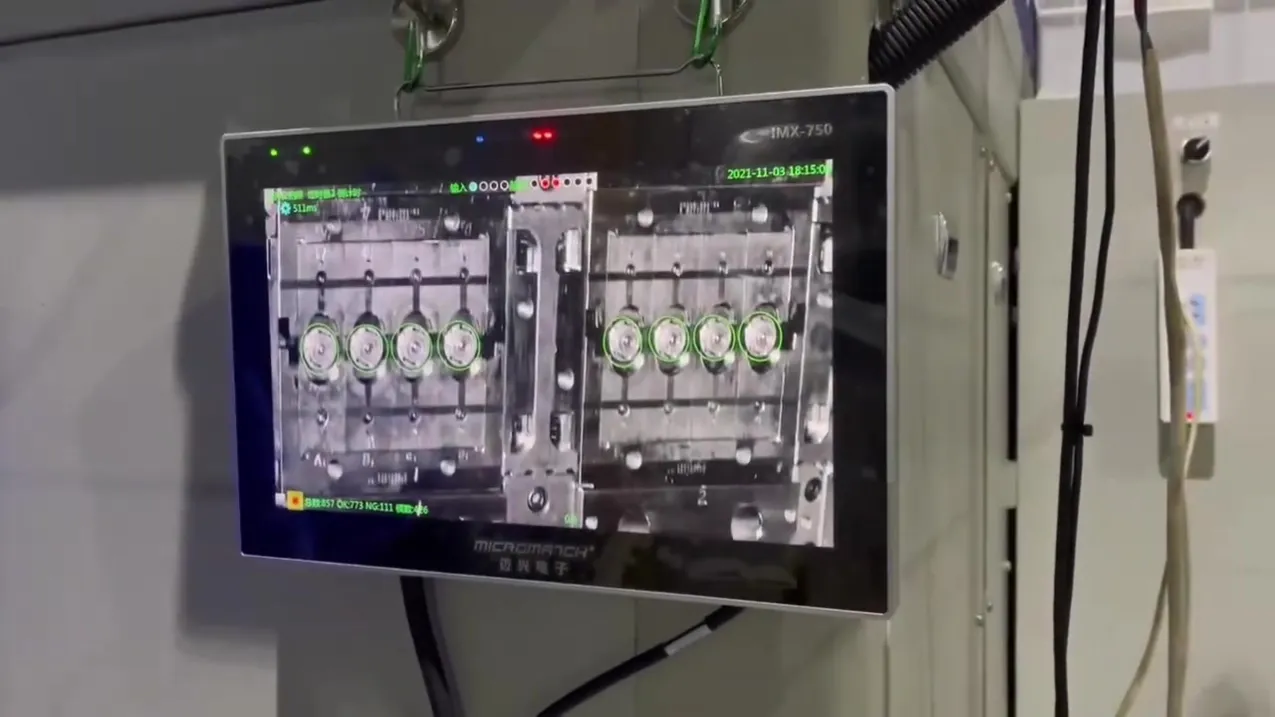
A mold monitoring system provides an additional visual inspection step before mold closing.
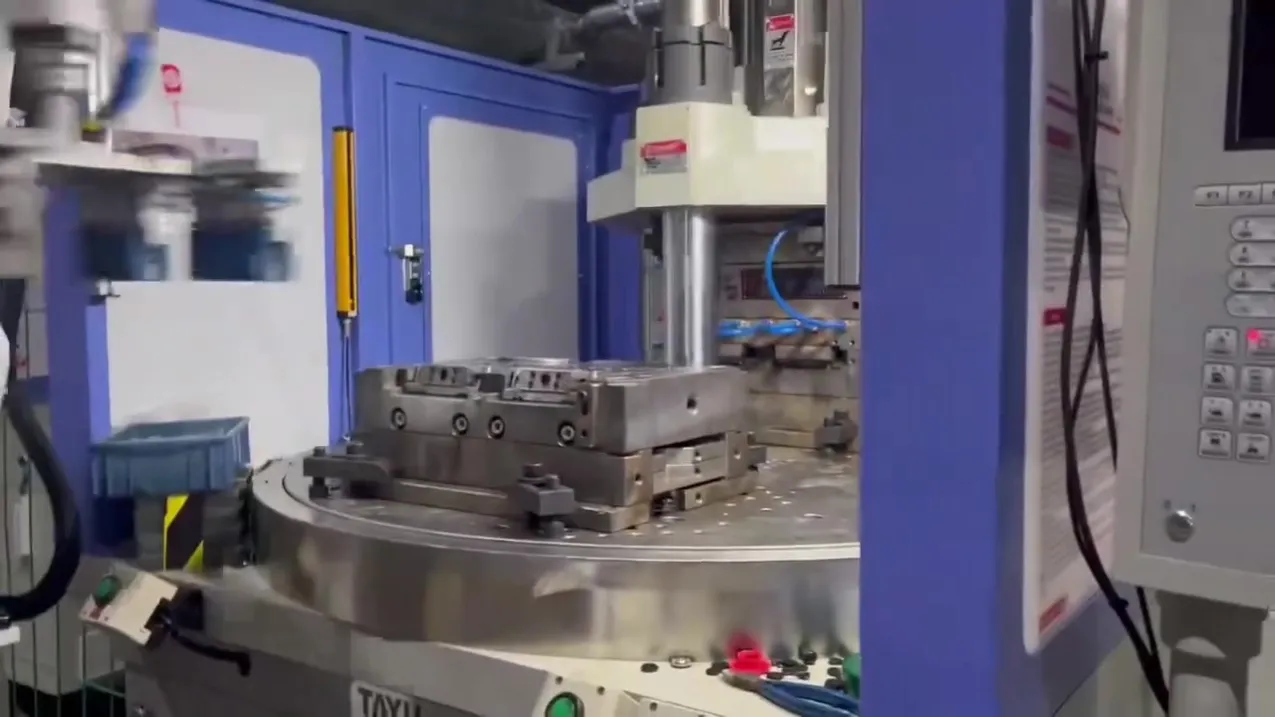
Open-mold view of the vertical injection molding
Common Risks in Insert Molding
Several conditions can lead to mold damage or production defects during insert molding.
1. Missing Inserts
An operator or robot may fail to place one or more inserts into the mold.
Without inspection, the molding machine may continue the cycle, resulting in defective products or unstable production.
A vision-based mold monitoring system can inspect the required insert positions before injection and confirm that every insert is present
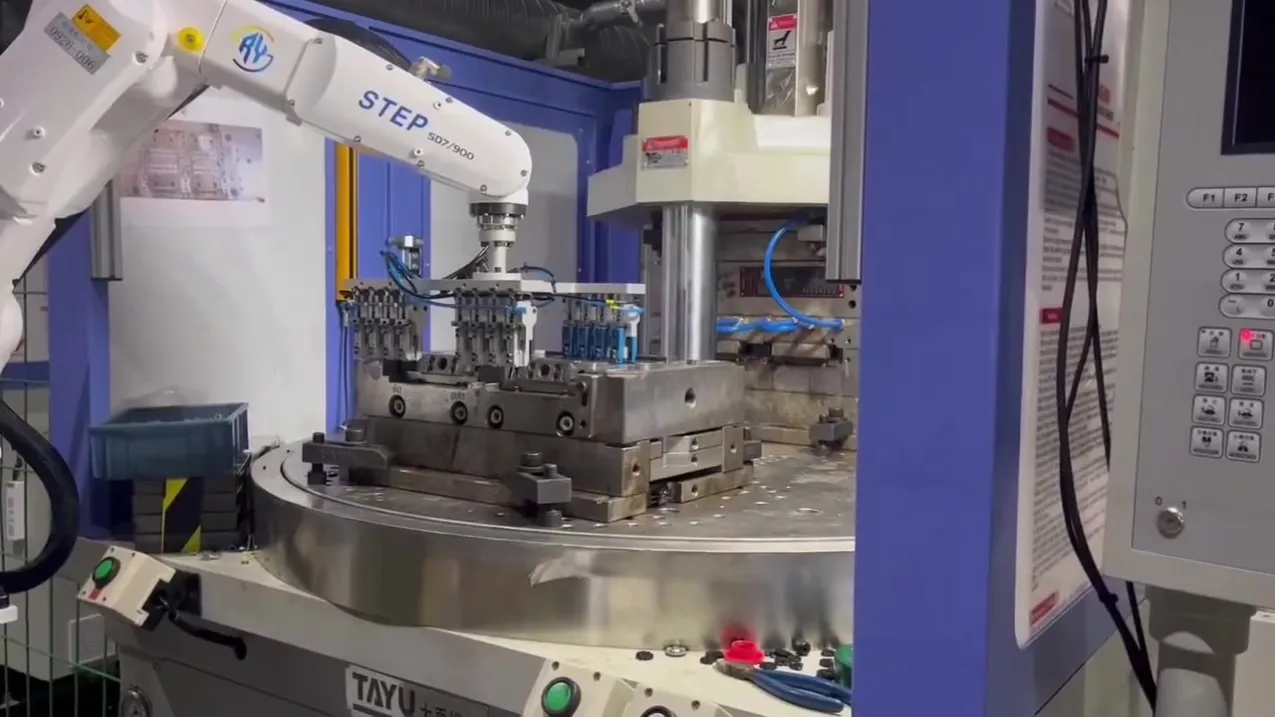
Robot tooling operating above the mold in the insert molding cell.
2. Misaligned or Tilted Inserts
An insert may be present but not properly seated.
This is particularly important for terminals, pins, threaded inserts, electrical contacts, and small metal components.
If an incorrectly positioned insert remains above the mold surface, mold closing can potentially damage the cavity, core, insert pin, or other precision components.
By defining inspection areas around each insert position, the system can identify abnormal positioning before allowing the mold to close.
3. Parts Remaining in the Mold
After injection and ejection, molded parts may occasionally remain attached to the cavity or core.
Typical causes include:
- insufficient ejection
- product deformation
- static electricity
- vacuum effect
- incorrect mold-release conditions
- robot pick-up failure
If the mold closes while a part is still inside, the mold may be damaged.
A mold monitoring camera can capture an image after ejection and verify that the mold area is clear before the next cycle.
Two Inspection Points in One Molding Cycle
For insert molding applications, mold monitoring can normally be performed at two important stages.
Before mold closing:
The camera checks whether inserts, terminals, pins, or other components are correctly positioned.
After product ejection:
The camera checks whether the molded product, runner, or insert remains inside the mold.
This two-stage inspection helps manufacturers monitor both loading and unloading conditions.
Why Vision Inspection Is Useful for Precision Molding
Traditional mold protection mainly depends on injection molding machine pressure or position monitoring.
However, very small inserts or lightweight plastic parts may not always generate enough resistance to trigger conventional mold protection functions.
A camera-based monitoring system directly checks the mold condition visually.
Inspection areas can be configured for specific positions such as:
- metal inserts
- connector terminals
- ejector pins
- sliders
- cavities
- cores
- molded parts
- runners
This makes visual mold monitoring particularly suitable for high-value molds and precision components.
Multi-Cavity Insert Molding
Multi-cavity molds can contain many individual inserts.
For example, a 16-cavity mold may require confirmation of 16 separate insert positions before every molding cycle.
Instead of relying only on manual observation, multiple inspection regions can be configured in the camera image.
Each position can be monitored individually, allowing the system to identify which cavity has an abnormal condition.
Integration with Injection Molding Machines
A mold monitoring system can communicate with the injection molding machine through I/O signals.
The typical process is:
- Mold opens.
- Robot or operator loads the inserts.
- Camera captures an image.
- The system checks the insert positions.
- If the inspection is OK, mold closing is permitted.
- After molding, the product is ejected or removed.
- The camera performs another inspection.
- Mold closing is permitted only when the mold area is clear.
If an abnormal condition is detected, the system can output an alarm signal and prevent the next mold-closing action.
Applications
Mold monitoring is especially useful for manufacturers producing:
- electrical connectors
- automotive electronic components
- sensor housings
- relay components
- terminal blocks
- medical plastic components
- metal-insert plastic parts
- threaded insert components
- precision multi-cavity molded parts
For manufacturers using valuable molds or producing high-volume insert-molded components, preventing even one serious mold-crushing incident can reduce considerable repair cost and production downtime.
Conclusion
Insert molding combines injection molding with an additional insert-loading process, which introduces more opportunities for positioning errors and mold interference.
A mold monitoring system provides visual confirmation of the mold condition before closing.
By detecting missing inserts, incorrect positioning, incomplete ejection, stuck parts, and other abnormal conditions, manufacturers can improve mold protection while maintaining stable automated production.
Looking for a mold monitoring solution for your insert molding application?
Send us your mold photos, number of cavities, insert size, molding cycle time, and machine configuration. We can help evaluate the suitable camera arrangement for your application.
Watch the Production Cell