Sep 30, 2026Mold Monitor System
Mold Protection Camera for Insert Molding: How to Verify Inserts Before Mold Closing
Learn how a mold protection camera verifies insert presence and position before mold closing, helping prevent damaged inserts, molds and interrupted production.
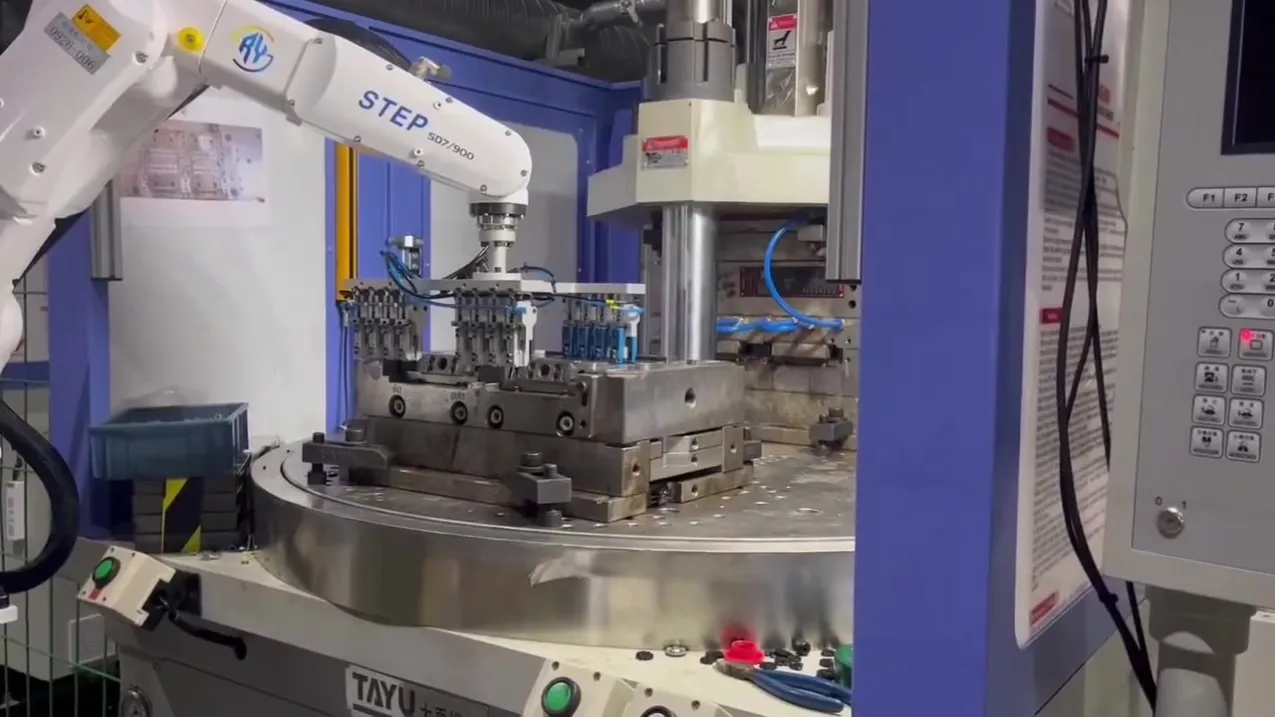
Insert molding creates a different mold-protection problem from conventional injection molding. Before every shot, a metal terminal, threaded insert, contact, pin or other component must be correctly loaded into the mold. If an insert is missing, tilted or outside its intended position, allowing the mold to close can damage the insert, cavity or other mold components.
This risk becomes more significant on vertical injection molding machines, rotary-table machines and applications with multiple small inserts. Vision-based mold protection is particularly useful here because the condition that matters is visible: is the insert actually present and correctly positioned before the machine continues? Vision mold-protection systems are used on vertical molding machines specifically to verify inserts before indexing or mold closing.
A practical monitoring sequence is:
Insert loading → mold reaches inspection position → camera captures image → defined insert areas are checked → OK permits the cycle to continue / NG prevents the next machine action.
The important distinction is that this is not conventional end-of-line quality inspection. The objective is to make a process decision before mold closing.
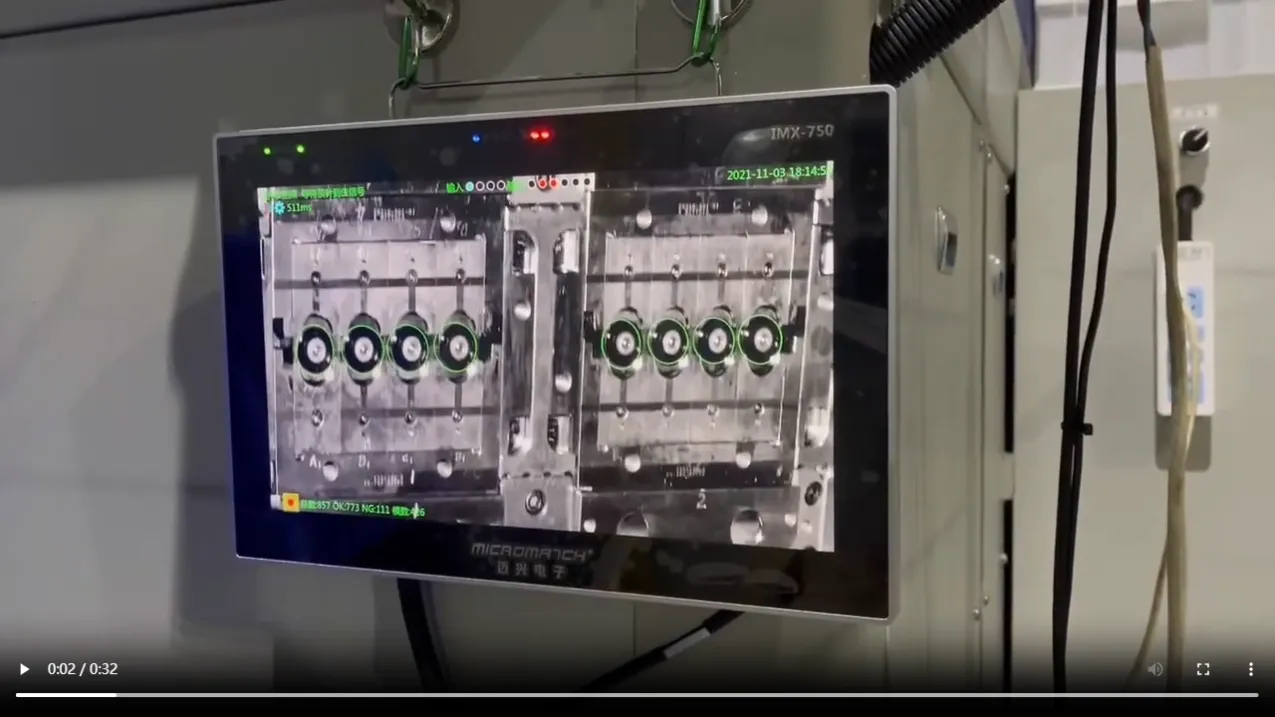
For a multi-insert product, individual regions of interest can be assigned to critical insert positions. This allows the system to monitor several locations within one image instead of treating the entire mold as a single inspection area.
After molding, a second inspection can be used to confirm that the molded component has been removed and that no product, runner or foreign object remains in the mold. Muxen’s mold monitoring architecture supports inspection at critical stages of the molding cycle and machine I/O interlocking when an abnormal condition is detected.
Camera position and lighting are critical. Small metallic inserts may create strong reflections, while deep cavities can create shadows. The camera therefore needs an unobstructed view of the actual feature being checked. A mold monitoring system cannot reliably inspect an insert that is hidden behind tooling or cannot be distinguished from the surrounding mold surface.
For electronic terminals, automotive insert-molded components and precision connectors, the most useful approach is to define exactly what must be confirmed before the mold closes: presence, approximate position, orientation where visually distinguishable, and whether the loading area is clear.
CTA: Have an insert-molding application with missing, shifted or incorrectly loaded inserts? Send us a mold photo, insert size and molding-machine layout. We can review whether camera-based mold monitoring is feasible.